
There’s a big difference between the wealthiest men and the wealthiest women in tech
Yikes. Now go read some good news about women in tech.
There’s a big difference between the wealthiest men and the wealthiest women in tech
Yikes. Now go read some good news about women in tech.
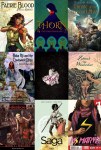

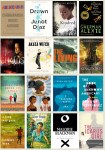




Best of 2014: Medievalpoc Fiction Week Masterpost
All Fiction Week Posts in one Mega Reading List!!
- Thistil Mistil Kistil: Medieval Webcomic
- Throne of the Crescent Moon by Saladin Ahmed
- Novels by Amelie Howard
- Mufaro’s Beautiful Daughters by John Steptoe
- Silver Phoenix by Cindy Pon (includes criticism)
- Diversity Showcase: Indie YA Science Fiction, Fantasy and Steampunk
- Never Alone (Kisima Innitchuna) [-gifs at link]
- Who Fears Death by Nnedi Okarafor
- Un Lun Dun by China Miéville
- Review by skemono: Marvel: Mighty Avengers, by Al Ewing and Greg Land
- “As Demographics Shift, Kids’ Books Stay Stubbornly White” by Elizabeth Blair
- Novels by Miriam Forster
- “A Diversity Reading List” by Ellen Oh
- Gaming and RPGs: V20 Dark Ages by David Hill
- Novels by Chimamanda Ngozi Adichie
- The Octavia Butler Bibliography
- “Ellen Oh Talks History of Hanboks” by Ellen Oh
- Reading List: African Literature
- The N. K. Jemisin Bibliography
- ElfQuest by Wendy and Richard Pini (includes criticism)
- Sword and Silence by Joyce Chng
- Amok: An Anthology of Asia-Pacific Speculative Fiction
- So Long Been Dreaming: Postcolonial Science Fiction and Fantasy
- The Ursula K. LeGuin Bibliography
- Birth of a Dark Nation by Rashid Darden
- The Shadow Hero by Gene Luen Yang and Sonny Liew
- “My Multicolored Heroes” by Sarwat Chadda
- Ms Marvel by G. Willow Wilson, Adrian Alphona & Jake Wyatt
- Baba Ali and the Clockwork Djinn by Danielle Ackley-McPhall and Day Al-Mohammed
- Novels by Zoe Marriott
- Short Fiction: Lunar Year’s End by Jaymee Goh (Crossed Genres)
- Short Fiction: Blessed are the Hungry by Victor Fernando R. Ocampo (Apex)
- The Blood of Eden series by Judy Kagawa
- Ash by Malinda Lo
- Diversity in YA: 10 Sci Fi/Fantasy Novels About Latino Characters
- Thorn by Intisar Khanani
- Courtship in the Country of Machine-Gods by Benjanun Sriduangkaew
- Silver Phoenix by Cindy Pon
- Unforgiven: A Highlander Fic (based on a 19th century painted portrait’s resemblance to Dwayne “The Rock” Johnson) by C. E. Murphy
- Zahrah the Windseeker by Nnedi Okarafor
- EastisEverywhere: topical commentary on discussions of multicultural Singaporean Literature
- #WeNeedDiverseBooks
- The Vast and Brutal Sea by Zoraida Cordova
- L’Île au trésor by Jean-Philippe Stassen and Sylvain Venayre
- Ancillary Justice by Ann Leckie (Nebula Award Winner for Best Novel)
- Review by r-stern: Assassin’s Creed
- The Years of Rice and Salt by Kim Stanley Robinson
- “Diversity, Literature, and the Audacity of Writing”-shwetanarayan
- EastIsEverywhere: Selection of Singaporean Literature
- Review by Medievalpoc: Dicebox by Jenn Manley Lee
- Review by Medievalpoc: Long Hidden: Speculative Fiction from the Margins of History ed. Rose Fox and Daniel José Older
- Mytho by Zimra
- Before There Was Mozart: The Story of Joseph Boulogne, Chevalier Saint-Georges by Lesa Cline-Ransome
- DiversityInYA: 9 Books With South Asian Main Characters
- Sorrow’s Knot by Erin Bow
- “Possibilities” by Medievalpoc
- Mary Robinette Kowal on the Glamourist Series, historical Accuracy, and Medievalpoc
- Discussion: Fairy Tales, Retellings, Race, and Creativity
- House of Hades by Rick Riordan
- “Black Nerds, Escapism, and Why We Need More Diverse Books” by Hannah Giorgis
- DiversityInYA: Diverse Selections Including Romeo and Juliet Retellings
- Review by Medievalpoc: Saga (Image Comics) by Brian K. Vaughn and Fiona Staples
- 10 African American YA Authors to Know
- No Queens in Afrika: Women Rulers in Sword & Soul and Other African-Inspired Fantasy
- The Girl Who Spun Gold by Virginia Hamilton, art by Leo and Diane Dillon
- Refilwe: An African Retelling of Rapunzel by Zukiswa Wanner
- Bitch Magazine Series: Girls of Color in Dystopian YA Fantasy Literature
- Princesses Behaving Badly: Real Stories From History-Without the Fairytale Endings by Linda Rodriguez McRobbie
- Neil Gaiman on Diverse Casting and American Gods
- Reading List: Books with Gay Women of Color Protagonists
- Fantasy Survey Results from writingcafe
- 10 Asian Pacific American YA Authors to Know
- The Dark-Thirty: Southern Tales of the Supernatural by Patricia McKissack & J. Brian Pinkney
- FOR LOVE & LIBERTY: Untold Love Stories of the American Revolution
- The Little Piano Girl: The Story of Mary Lou Williams, Jazz Legend
- Erekos by A.M. Tuola
- Dark Metropolis, Otherbound, Drift, Rebellion and more from DiversityInYA
- Crow in the Hollow by Brian W. Parker
- The Dragon King Chronicles by Ellen Oh
- “Don’t Categorize Diverse Books as ‘Special Interest’” by Ellen Oh
- “Notable Novels for Teens About the Arab World” by Elsa Marston
- Sin Eaters: Retribution by Kai Leakes
- The Astonishing Life of Octavian Nothing, Traitor to the Nation by M. T. Anderson
- “The Most Important Advice I Can Give To Writers” by blue-author
- Half World by Hiromi Goto
- Author Corinne Duyvis on why her YA fantasy, Otherbound, is not an issue book
- Mare’s War by Tanita S. Davis
- Novels by Nnedi Okarafor
- Faerie Blood by Angela Korra’ti
- Annals of the Western Shore by Ursula K. LeGuin
- The Dreamblood series by N.K. Jemisin
- “12 Fundamentals of Writing “The Other” (And The Self)“ by Daniel José Older
- Junot Díaz and the White Gaze, La Respuesta Magazine
- “Whitewashing and the Earthsea Cycle” by Medievalpoc
- The Circle of Magic books by Tamora Pierce
- Review by Medievalpoc: The Left Hand of Darkness by Ursula K. LeGuin
- “The Diversity Struggle for a POC Author” by Lydia Kang
- Midnight Robber by Nalo Hopkinson
- Discussion and Humor: Fantasy Sub-Genre Fiction “Explained”
- “Race, Sexuality, and the Mainstream” by Malinda Lo
- Review by Medievalpoc: Kate Elliott’s Crown of Stars (a blurb from this review is included in the front matter of The Very Best of Kate Elliott, forthcoming in Feb. 2015)
- Wizards of the Coast’s Doug Beyer on Kiora, the Crashing Wave and Cultural Appropriation in Fantasy Media
- Broken Age trailer from Doublefine Studios
- Review by r-stern: Yoko Tsuno by Roger Leloup
- “Children and the Myth of Colorblind Youth” by Medievalpoc
- “Who Gets to Be a Superhero? Race and Identity in Comics” by Gene Demby
- Review by Medievalpoc: The Inheritance Trilogy by N. K. Jemisin
- Medievalpoc accidentally reviews Wolves of the Dawn by William Sarabande while attempting to answer a question
- Kids Respond to Whitewashing on Book Covers
Bookmark this for the archives!









Steven Universe + the diverse cast of female voice actresses → requested by anonymous
From top to bottom: Susan Egan, Estelle, DeeDee Magno Hall, Michaela Dietz, Charlyne Yi, Erica Luttrell, Jennifer Paz, Kimberly Brooks, Shelby Rabara, Rita Rani Ahuja, Aimee Mann, Nicki Minaj, AJ Michalka, Grace Rolek, Kate Micucci, Mary Elizabeth McGlynn, Reagan Gomez-Preston, Toks Olagundoye
why do superheroes care so much about their cities? its always “i have to protect this city” or “people of this city will die” like chill i mean shit i dont even know who my mayor is

Missing link found between brain, immune system — with major disease implications
In a stunning discovery that overturns decades of textbook teaching, researchers at the University of Virginia School of Medicine have determined that the brain is directly connected to the immune system by vessels previously thought not to exist.
That such vessels could have escaped detection when the lymphatic system has been so thoroughly mapped throughout the body is surprising on its own, but the true significance of the discovery lies in the effects it could have on the study and treatment of neurological diseases ranging from autism to Alzheimer’s disease to multiple sclerosis.
“Instead of asking, ‘How do we study the immune response of the brain?,’ ‘Why do multiple sclerosis patients have the immune attacks?,’ now we can approach this mechanistically – because the brain is like every other tissue connected to the peripheral immune system through meningeal lymphatic vessels,” said Jonathan Kipnis, a professor in U.Va.’s Department of Neuroscience and director of U.Va.’s Center for Brain Immunology and Glia. “It changes entirely the way we perceive the neuro-immune interaction. We always perceived it before as something esoteric that can’t be studied. But now we can ask mechanistic questions.“
He added, “We believe that for every neurological disease that has an immune component to it, these vessels may play a major role. [It’s] hard to imagine that these vessels would not be involved in a [neurological] disease with an immune component.”
Kevin Lee, who chairs the Department of Neuroscience, described his reaction to the discovery by Kipnis’ lab: “The first time these guys showed me the basic result, I just said one sentence: ‘They’ll have to change the textbooks.’ There has never been a lymphatic system for the central nervous system, and it was very clear from that first singular observation – and they’ve done many studies since then to bolster the finding – that it will fundamentally change the way people look at the central nervous system’s relationship with the immune system.”
Even Kipnis was skeptical initially. “I really did not believe there are structures in the body that we are not aware of. I thought the body was mapped,” he said. “I thought that these discoveries ended somewhere around the middle of the last century. But apparently they have not.”
The discovery was made possible by the work of Antoine Louveau, a postdoctoral fellow in Kipnis’ lab. The vessels were detected after Louveau developed a method to mount a mouse’s meninges – the membranes covering the brain – on a single slide so that they could be examined as a whole. “It was fairly easy, actually,” he said. “There was one trick: We fixed the meninges within the skullcap, so that the tissue is secured in its physiological condition, and then we dissected it. If we had done it the other way around, it wouldn’t have worked.”
After noticing vessel-like patterns in the distribution of immune cells on his slides, he tested for lymphatic vessels and there they were. The impossible existed.
The soft-spoken Louveau recalled the moment: “I called Jony [Kipnis] to the microscope and I said, ‘I think we have something.’”
As to how the brain’s lymphatic vessels managed to escape notice all this time, Kipnis described them as “very well hidden” and noted that they follow a major blood vessel down into the sinuses, an area difficult to image. “It’s so close to the blood vessel, you just miss it,” he said. “If you don’t know what you’re after, you just miss it.
“Live imaging of these vessels was crucial to demonstrate their function, and it would not be possible without collaboration with Tajie Harris,” Kipnis noted. Harris is an assistant professor of neuroscience and a member of the Center for Brain Immunology and Glia. Kipnis also saluted the “phenomenal” surgical skills of Igor Smirnov, a research associate in the Kipnis lab whose work was critical to the imaging success of the study.
The unexpected presence of the lymphatic vessels raises a tremendous number of questions that now need answers, both about the workings of the brain and the diseases that plague it.
For example, take Alzheimer’s disease. “In Alzheimer’s, there are accumulations of big protein chunks in the brain,” Kipnis said. “We think they may be accumulating in the brain because they’re not being efficiently removed by these vessels.” He noted that the vessels look different with age, so the role they play in aging is another avenue to explore.
And there’s an enormous array of other neurological diseases, from autism to multiple sclerosis, that must be reconsidered in light of the presence of something science insisted did not exist.
Image:
The lymphatic system map: old (left) and new.
This is really big. This is really big news in medicine and I suspect in mental health as well. Consider the recent discoveries around the association between mental health and the immune system;
- In 2013 they confirmed Narcolepsy is an immune disorder.
- People with Post Traumatic Stress Disorder are shown to have a hyperactive immune system.
- P.A.N.D.A.S. is a recent term for a disorder used to describe the mental changes in children after Strep/Staph Infection.
There are still so many things we are finding out about the nature of disease and the human body – especially the brain.
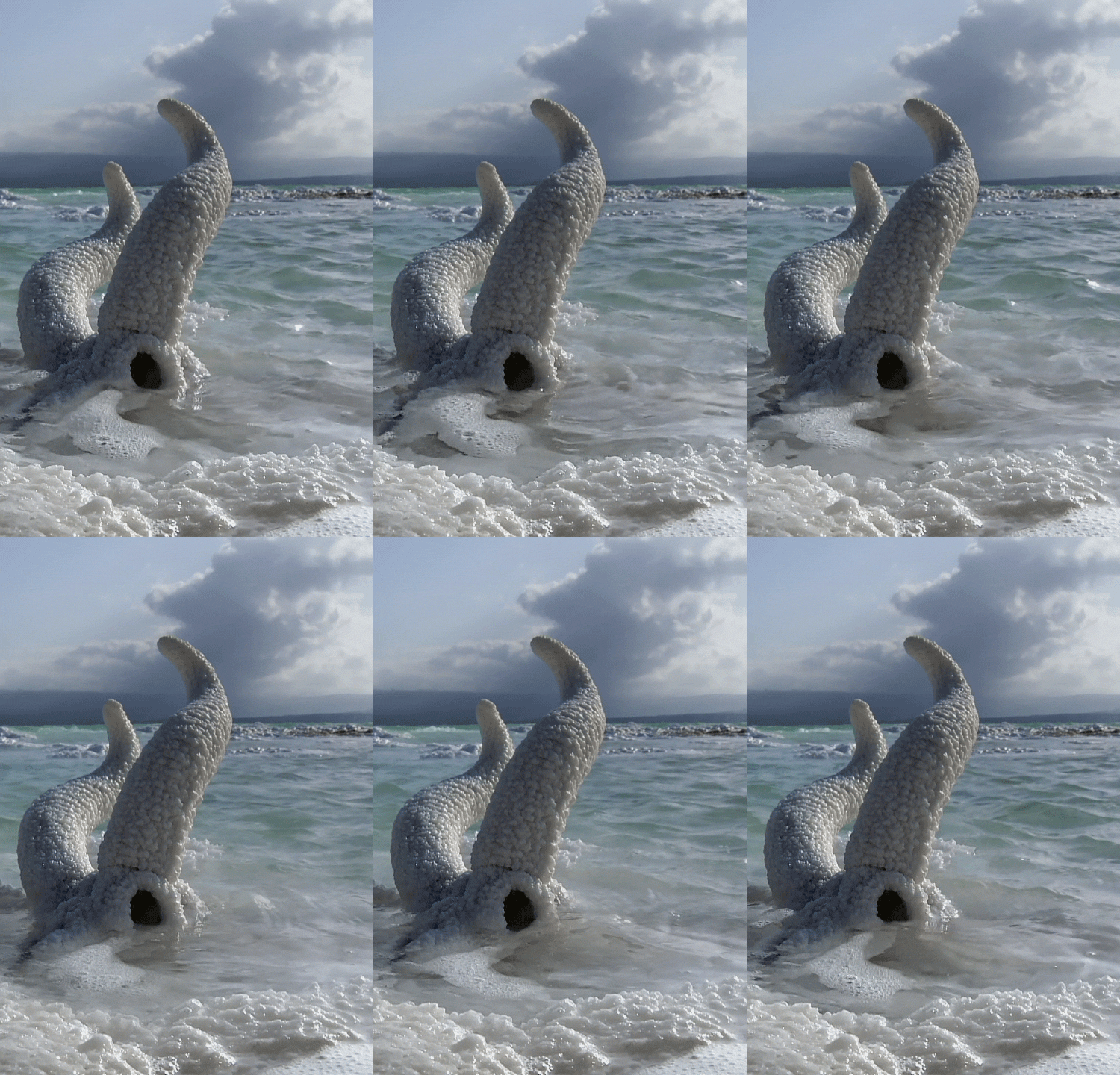
Skull in a salt lake
Wow that is the highest quality gif I have ever seen!
It looks like I’m actually there
reblogging solely for the intense fucking quality of this gif
Do you ever just stare at a character and want to reach out and stroke their face and say
you have such a beautiful character design
Whenever I see a post on tumblr suggesting aliens don’t have gender, I always think–‘but what if also the reverse. What if aliens also have some fundamental social construct we don’t’.
Like, they come and meet us and they’re like ‘hey this is an awkward question but what’s your gooblebygark?’
And we’re like what.
‘You know, the… the thing. Your goobledygark. The thing that dictates whether you’re gnarfgnoovles or brubledoopes’
What. What. What the fuck, those words don’t even mean anything??? What are you talking about?
‘Look, your ridiculous human languages don’t seem to have the words for these! But they’re totally a thing, they’re like, fundamental aspects of social life for our species, just… just let us lick you so we can know what verb tense to use when we speak to you.’
What does one thing have to do with the other??? That makes no–
‘UGH, nevermind, you’re totally brubledoopes, I can just tell, I don’t even need to taste your bacterial skin colonies.’
And then another alien overhears and is like ‘holy shit, you can’t stereotype like that, that’s SO NOT COOL’
‘yeaH BUT THEY WON’T LET ME LICK THEM’




Eskisehir Rixos Spa and Thermal Hotel in Odunpazari, Eskisehir, Turkey; designed by GAD & Gokhan Avciogl
 nomad-hermit