the-gay-lantern:
ladylokiofmidgard:
Ok Folks, listen up. The electoral college doesn’t vote officially until December 19th. It is extremely rare and almost unheard of for them to vote against the majority of their district BUT IT CAN HAPPEN. The Electoral College was made for exactly this purpose!
Remember, prior to December 19th, we have:
Court Case against Trump University
Court Case Against Trump for accusations for rape and sexual assault
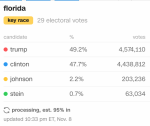
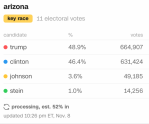
If we pull together, we can swing this. We will have to be tireless. We will have to be unyielding. We will have to write, call, and march on every swing state that can have their electoral vote differently. We have to make our voices heard. Hillary WON the popular vote which means more of America wants her to be President than Trump. There is precedence for this to happen. There is cause. There is hope. With no state law against Pennsylvania voting against their popular vote, that’s 20 to go to Hillary. If Florida or any three other states swing, SHE WINS.
If we get them to vote different, we don’t have to worry about Trump or Pence because Hillary will have won. Until she hands over the nomination, she is still saying she is waiting for the official electoral votes to be made.
We can do this. We can win. LET’S SPREAD THIS LIKE WILD FIRE ON HERE AND FACEBOOK!
Dear god, someone tell me what to do
Find out the swing vote state’s Electoral College Representatives and phone, mail, email, share, and march on their offices. We have just over a month to get this together. If the Electoral College decides to change their votes for Hillary on December 19th, we will have Hillary as our President. The reason why so many people aren’t talking about this is because it’s very rare for the Electoral College to vote differently than the districts. Some states even have laws preventing that, such as Ohio and North Carolina. But, Pennsylvania does NOT have that law. Florida is tricky, but it can be done. NH is also another one that can swing it as well. If we get just a few of them to switch, we will have won.
EDIT:
Adding additional information to this post as no one is reblogging the updated one: The Lawsuit against Trump for Rape has been dropped for the moment but the Trump University suite still stands.
Important Information:
Who selects the Electors?
Choosing each state’s Electors is a two-part process. First, the political parties in each state choose slates of potential Electors sometime before the general election. Second, on Election Day, the voters in each state select their state’s Electors by casting their ballots for President.The first part of the process is controlled by the political parties in each state and varies from state to state. Generally, the parties either nominate slates of potential Electors at their state party conventions or they chose them by a vote of the party’s central committee. This happens in each state for each party by whatever rules the state party and (sometimes) the national party have for the process. This first part of the process results in each Presidential candidate having their own unique slate of potential Electors.Political parties often choose Electors for the slate to recognize their service and dedication to that political party. They may be state elected officials, state party leaders, or people in the state who have a personal or political affiliation with their party’s Presidential candidate. (For specific information about how slates of potential Electors are chosen, contact the political parties in each state.)The second part of the process happens on Election Day. When the voters in each state cast votes for the Presidential candidate of their choice they are voting to select their state’s Electors. The potential Electors’ names may or may not appear on the ballot below the name of the Presidential candidates, depending on election procedures and ballot formats in each state.The winning Presidential candidate’s slate of potential Electors are appointed as the state’s Electors—except in Nebraska and Maine, which have proportional distribution of the Electors. In Nebraska and Maine, the state winner receives two Electors and the winner of each congressional district (who may be the same as the overall winner or a different candidate) receives one Elector. This system permits the Electors from Nebraska and Maine to be awarded to more than one candidate.
Are there restrictions on who the Electors can vote for?
There is no Constitutional provision or Federal law that requires Electors to vote according to the results of the popular vote in their states. Some states, however, require Electors to cast their votes according to the popular vote. These pledges fall into two categories—Electors bound by state law and those bound by pledges to political parties.The U.S. Supreme Court has held that the Constitution does not require that Electors be completely free to act as they choose and therefore, political parties may extract pledges from electors to vote for the parties’ nominees. Some state laws provide that so-called “faithless Electors” may be subject to fines or may be disqualified for casting an invalid vote and be replaced by a substitute elector. The Supreme Court has not specifically ruled on the question of whether pledges and penalties for failure to vote as pledged may be enforced under the Constitution. No Elector has ever been prosecuted for failing to vote as pledged.Today, it is rare for Electors to disregard the popular vote by casting their electoral vote for someone other than their party’s candidate. Electors generally hold a leadership position in their party or were chosen to recognize years of loyal service to the party. Throughout our history as a nation, more than 99 percent of Electors have voted as pledged.
VERY IMPORTANT DATES:
November 8, 2016—Election DayRegistered voters cast their votes for President and Vice President. By doing so, they also help choose the electors who will represent their state in the Electoral College.
Mid-November through December 19, 2016 After the presidential election, the governor of your state prepares seven Certificates of Ascertainment. “As soon as practicable,” after the election results in your state are certified, the governor sends one of the Certificates of Ascertainment to the Archivist.Certificates of Ascertainment should be sent to the Archivist no later than the meeting of the electors in December. However, federal law sets no penalty for missing the deadline.The remaining six Certificates of Ascertainment are held for use at the meeting of the Electors in December.
December 13, 2016- States must make final decisions in any controversies over the appointment of their electors at least six days before the meeting of the Electors. This is so their electoral votes will be presumed valid when presented to Congress.Decisions by states’ courts are conclusive, if decided under laws enacted before Election Day.
December 19, 2016- The Electors meet in their state and vote for President and Vice President on separate ballots. The electors record their votes on six “Certificates of Vote,” which are paired with the six remaining Certificates of Ascertainment.The electors sign, seal, and certify six sets of electoral votes. A set of electoral votes consists of one Certificate of Ascertainment and one Certificate of Vote. These are distributed immediately as follows:one set to the President of the Senate (the Vice President) for the official count of the electoral votes in January;two packages to the Secretary of State in the state where the electors met—one is an archival set that becomes part of the public record of the Secretary of State’s office and the other is a reserve set that is subject to the call of the President of the Senate to replace missing or incomplete electoral votes;two packages to the Archivist—one is an archival set that becomes part of the permanent collection at the National Archives and Records Administration and the other is a reserve set that is subject to the call of the President of the Senate to replace missing or incomplete electoral votes; and one set to the presiding judge in the district where the Electors met—this is also a reserve set that is subject to the call of the President of the Senate to replace missing or incomplete electoral votes.



 nomad-hermit