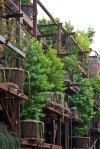
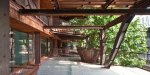
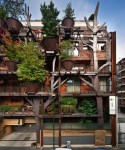
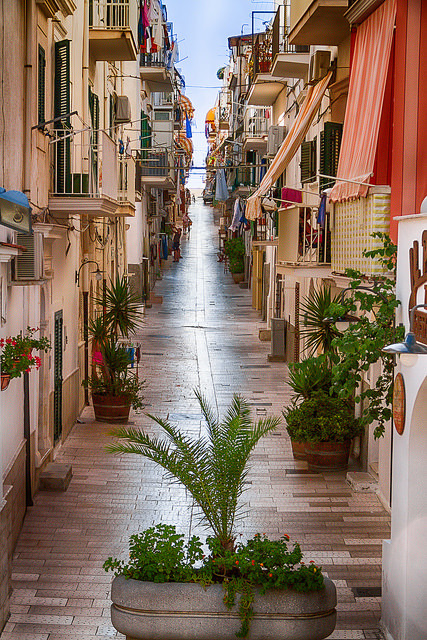
25 Verde ◆ Turn, Italy
This forest-like, five story apartment building was designed by Italian architect, Luciano Pia. The structure holds 63 units and 150 breathtaking trees that absorb approximately 200,000 liters of carbon dioxide per hour to protect the residents from the bustling city’s pollution. The trees also create a microclimate within the building to moderate the extreme temperatures of summer and winter. This is looks like the perfect home for the modern-day Lost Boy.
Tag: Italy

Gigantic 16th century sculpture known as Colosso dell’Appennino, or the Appennine Colossus located in the park of Villa Demidoff (just north of Florence, Italy). It was erected in 1580 by Italian sculptor Giambologna (1529-1608, Italy).
On June 15, 1969 in Battaglia, Italy a man named Bruno bought a few jugs of wine, some sausages and a few other items and set up a tiny food stand underneath a tree to see if anyone would show up.
By the end of the day he had sold almost everything and the family restaurant, Ai Pioppi, was born. The next month he had a chance encounter with a blacksmith who didn’t have time to make a few hooks for some chains. Bruno decided he would learn to weld himself and enjoyed it so much he began to dream up small rides he could build to entice new customers to Ai Pioppi. It turned out to be brilliantly successful.
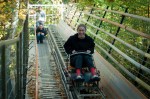
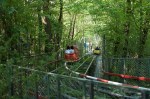
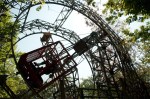
Now forty years later, the forest around the restaurant is packed with swings, multi-story slides, seesaws, gyroscopes, tilt-a-whirls, and bizarre kinetic roller-coasters for adults and children. (Source)
“One morning in 1961 at the Querini Stampalia, I asked him to keep water outside the palace… He looked at me and after a pause he said: “Inside, inside! Water must be inside, like everywhere in the city. We just need to control and use it as a shining and reflecting substance. You will see the light reflections on the yellow and purple stuccos on the ceiling. That is so gorgeous!”
– Giuseppe Mazzariol, director of the Fondazione Querini Stampalia, recalls Carlo Scarpa’s attitude to the creation of the museum space in the centre of Venice.
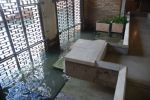
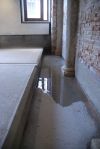
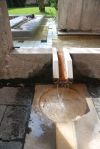
When I arrived at the Fondazione one afternoon last week, the tide was rising and canal water was slowly infiltrating the dusty channels cast into the museums interior, making it’s way through round holes cut into the walls. The steel grilled ‘watergate’ in the museums facade is permanently submerged and the sound of water lapping against stone inside the corridor and it’s cooling effect makes the space uniquely beautiful, neither interior nor exterior.
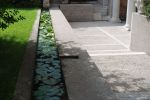
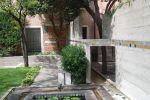
In the garden to the rear there is a beautiful continuity of form and material from the inside spaces.
I think Scarpa’s design and many of the older buildings in Venice offer a positive glimpse of future opportunities for living in cities threatened by rising water levels.