The 75 most common words make up 40% of occurrences
The 200 most common words make up 50% of occurrences
The 524 most common words make up 60% of occurrences
The 1257 most common words make up 70% of occurrences
The 2925 most common words make up 80% of occurrences
The 7444 most common words make up 90% of occurrences
The 13374 most common words make up 95% of occurrences
The 25508 most common words make up 99% of occurrences
This article has an excellent summary on how to rapidly learn a new language within 90 days.
We can begin with studying the first 600 words. Of course chucking is an effective way to memorize words readily. Here’s a list to translate into the language you desire to learn that I grabbed from here! 🙂
EXPRESSIONS OF POLITENESS (about 50 expressions)
‘Yes’ and ‘no’: yes, no, absolutely, no way, exactly.
Question words: when? where? how? how much? how many? why? what? who? which? whose?
Apologizing: excuse me, sorry to interrupt, well now, I’m afraid so, I’m afraid not.
Meeting and parting: good morning, good afternoon, good evening, hello, goodbye, cheers, see you later, pleased to meet you, nice to have met.
Interjections: please, thank you, don’t mention it, sorry, it’ll be done, I agree, congratulations, thank heavens, nonsense.
Space: into, out of, outside, towards, away from,
behind, in front of, beside, next to, between, above, on top of, below,
under, underneath, near to, a long way from, through.
Time: after, ago, before, during, since, until.
DETERMINERS (about 80 words)
Articles and numbers: a, the; nos. 0–20; nos. 30–100; nos. 200–1000; last, next, 1st–12th.
Demonstrative: this, that.
Possessive: my, your, his, her, its, our, their.
Quantifiers: all, some, no, any, many, much, more, less, a few, several, whole, a little, a lot of.
Universal: everyone, everybody, everything, each, both, all, one, another.
Indefinite: someone, somebody, something, some, a few, a little, more, less; anyone, anybody, anything, any, either, much, many.
Negative: no-one, nobody, nothing, none, neither.
ADVERBS (about 60 words)
Place: here, there, above, over, below, in front, behind,
nearby, a long way away, inside, outside, to the right, to the left,
somewhere, anywhere, everywhere, nowhere, home, upstairs, downstairs.
Time: now, soon, immediately, quickly, finally,
again, once, for a long time, today, generally, sometimes, always,
often, before, after, early, late, never, not yet, still, already, then
(=at that time), then (=next), yesterday, tomorrow, tonight.
Quantifiers: a little, about (=approximately), almost, at least, completely, very, enough, exactly, just, not, too much, more, less.
Manner: also, especially, gradually, of course,
only, otherwise, perhaps, probably, quite, so, then (=therefore), too
(=also), unfortunately, very much, well.
CONJUNCTIONS (about 30 words)
Coordinating: and, but, or; as, than, like.
Time & Place: when, while, before, after, since (=time), until; where.
If y’all use a decent box mix and use melted butter instead of vegetable oil, an extra egg, and milk instead of water, no one can tell the difference. I sure as hell can’t.
Also, if you add a little almond extract to vanilla cake, or a little coffee to chocolate cake, it sends it through the roof.
This concludes me attempting to be helpful.
yo I can vouch for this I’ve done this for the last few cakes I’ve made and holy crap it makes suuuuch a difference the cake is still fluffy, but it also seems more dense, and it doesn’t dry out like at all you can leave it uncovered on the counter all day after being cut into, and it won’t get all crusty and dry this is an amazing way to take your cakes to the next level
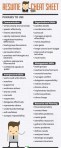
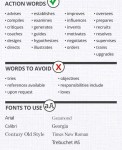
Type ALL the key/action words in white and the smallest font possible at the bottom of your resume because companies use databases that pinpoint them to select potential hires for recruiters
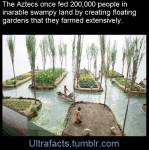
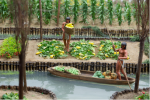
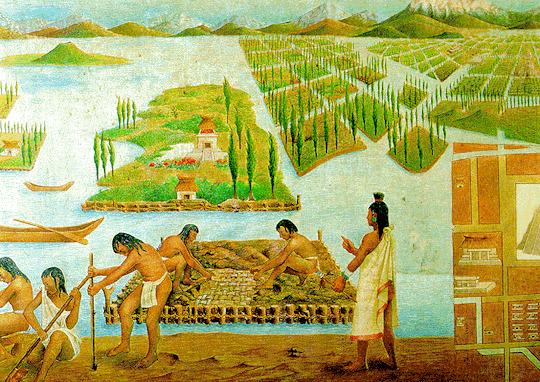
How on earth would you feed a city of over 200,000 people when the land around you was a swampy lake? Seems like an impossible task, but the Aztec managed it by creating floating gardens known as chinampas, then they farmed them intensively.
These ingenious creations were built up from the lake bed by piling layers of mud, decaying vegetation and reeds. This was a great way of recycling waste from the capital city Tenochtitlan. Each garden was framed and held together by wooden poles bound by reeds and then anchored to the lake floor with finely pruned willow trees. The Aztecs also dredged mud from the base of the canals which both kept the waterways clear and rejuvenate the nutrient levels in the gardens.
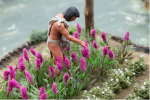
A variety of crops were grown, most commonly maize or corn, beans, chillies, squash, tomatoes, edible greens such as quelite and amaranth. Colourful flowers were also grown, essential produce for religious festivals and ceremonies. Each plot was systematically planned, the effective use of seedbeds allowed continuous planting and harvesting of crops.
Between each garden was a canal which enabled canoe transport. Fish and birds populated the water and were an additional source of food. [x]
Would the chicken be the leader or the violent loose cannon who wants to be the leader but grudgingly knows goat is better suited to the role
I live on a farm and can confirm-
Goat is leader, tactical genius with a shrewd and cunning intellect but the burden of command weighs heavily on him, he can escape any prison or restrains. He dreams of freeing his people from slavery.
Rooster’s hot-headed nature get him into trouble but his Flaming Spurs fighting-style can almost always get him back out and though he sometimes clashes with his teammates his hard-won friendship is unshakable
Highlander is just a simple country-girl blessed with immense strength calpable of sending a man flying with the lightest tap, the others must protect her from those who would take advantage of her naivety and innocence
Sheep is the Team Mom and voice of reason, you will never find a more loyal friend. she never hesitates to shield her loved ones from even the fiercest assault with her thick fleece and can draw on the power of her friends in times of great need
Llama is an enigma to even his fellow warriors and wields unusual and mysterious Forbidden Techniques
When you delete things off of a mobile device (like a phone or digital camera), the file goes to your phone’s recycle bin (just like on a desktop computer or laptop), typically an invisible folder named .trashes or .trash. There, it continues to take up the same amount of memory storage as it did before you ‘deleted’ it. To empty your mobile device’s recycling bin, plug your phone into your desktop or laptop via USB as a memory device, right click on your desktop/laptop’s recycling bin/trash, and tell it to empty your recycling bin/empty trash. Your computer will empty all .trash/.trashes folders, including the one on your phone, actually deleting the files permanently this time, freeing up your phone/camera’s memory space. Reblog to save a life.
(I know this works on MAC with my Andriod, it’s not too far a stretch to do the same on Windows and/or with other phones as well. In fact, it should be easier to do on Windows since Windows Explorer is more conducive to finding hidden folders.)
FINDING THIS RANDOM POST ON MY DASHBOARD GAVE ME THE BEST ANSWER TO SHIT I’VE BEEN GOOGLING ABOUT FOR MONTHS!!!



 nomad-hermit