medievalpoc:

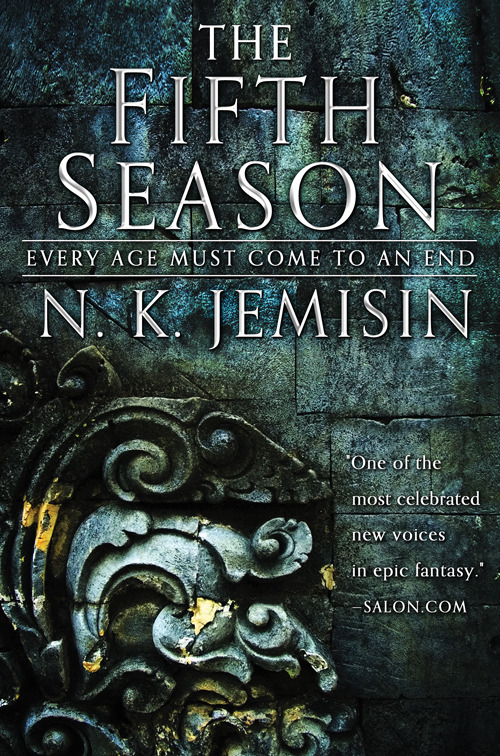
This is the way the world ends. Again.

‘Fifth Season’ Embraces The Scale And Complexity Of Fantasy (NPR review)

by Jason Heller

In N. K. Jemisin’s new novel, The Fifth Season, the payoff
is astounding. Sure, there’s a whopping glossary at the end of the book —
two of them, actually — but that simply underscores how much sumptuous
detail and dimensionality she’s packed into her premise. The story takes
place in a land called the Stillness, a tragically ironic name, seeing
as how the geography is in constant, violent flux. The entire world
undergoes apocalypses on a periodic basis, as regular as weather
patterns. In the fractured landscape that houses the sprawling city of
Yumenes, that instability has given civilization an equally volatile
reality. A caste system scars it. Science and magic have uneasily mixed.
And Essun is a small-town schoolteacher whose family has been brutally
ripped apart from within.

Jemisin has built similarly complex worlds before, most notably in her multiple-award-nominated The Inheritance Trilogy. The Fifth Season
is the first book in Jemisin’s latest series, The Broken Earth, and
it’s already off to an equally promising start. Essun — grief-stricken
after her husband suddenly kills their small son and flees with their
daughter — begins a quest that starts out as a rescue but becomes
something else entirely, as a horrific new cataclysm bears down on the
Stillness.

Whether volcanic, seismic, atmospheric, geomagnetic,
or manmade, each new disaster is called a Season, and the next one
threatens to be the most devastating in recent history. History itself
has gone through numerous disruptions, creating an ambiguity about the
ancient era that comes to bear on Essun’s own shadow-shrouded past and
present. Not to mention those of Syen and Damaya, characters of varying
castes whose storylines overlap with Essun’s in a deeply clever and
affecting way that drives home the mechanisms of power and oppression at
work in vast backdrop of The Stillness. The Fifth Season isn’t
a straightforward book any more than it’s an upbeat one, but it’s
stronger for that. And Jemisin maintains a gripping voice and an
emotional core that not only carries the story through its complicated
setting, but sets things up for even more staggering revelations to come
in future installments of the series.

Read More at NPR.org

In case anyone was wondering, this was my personal most-anticipated book of the year (and last year, since it got pushed back a bit! :P). It came out yesterday, and by the end of today it will be in my very own grubby little hands. I can’t wait to devour it!

Barnes and Noble | Amazon | Powells | GoodReads

bell hooks resources

themindislimitless:

Some of the work bell hooks’ has done as available on the internet for personal education and reference. Certain books that were up are gone and I’m looking about finding them again. In the meantime if you need them, contact me by leaving a message with your email address in the submissions box and I’ll email them to you. If you find anything, please contact me as well. The most updated version of this list will always be here.

To note, this is meant in particular for those people who’d like to educate themselves but don’t have the resources to get these books for themselves. bell hooks has put a lot of work into these, and it would be horrible if you could afford to buy the books and didn’t.

More online resources here.

Edit as of 23rd June, 2014: list updated (and alphabetized). Many thanks to wretchedoftheearth, elainecastillo, grim-dark, erosum, mmmajestic, andreaisace, ebookcollective, cantbereallif, ericstoller, sittinghereinbluejayway, nebulaemporium and other people through emails who all helped add links and resources.

Strange Gold Spirals Dating Back To Bronze Age Unearthed In Denmark

britishhistorypodcast:

medievalpoc:

mr-elbows-private:

madgastronomer:

thelefthandedwife:

glegrumbles:

uristmcdorf:

ash-of-the-loam:

glegrumbles:

answersfromvanaheim:

stitch-n-time:

…evidently these people have never done goldwork embroidery.

Oh look.

It took me like 2 seconds

to come up with a viable option.

I’m willing to bet there will be a follow up article about how scholars have made a startling discovery that the gold was used for crafts and the craft people of the world will just be like “…..Really?”

I love how they just kind of leap to “A PRIEST KING MUST HAVE WORN THIS SHINY GOLD STUFF!”

“Everything is mysterious! We have no idea! It, uh… it was for a ritual, yes.”
“…don’t you say everything is for a ritual?”
“Shhh, ancient peoples liked rituals.”
“But there’s a giant painting on this wall showing how this was used, and modern crafters you could ask.”
“SHHH. RITUALS.”

I have a very strong urge to email that researcher.

This keeps happening, you know.

For decades we thought water or oil was poured onto the rocks being used to build Egyptian pyramids for “ritual purposes”. Turns out if you ask people who have worked on sand they can tell you that wet sand is A LOT EASIER TO DRAG ROCKS ACROSS.

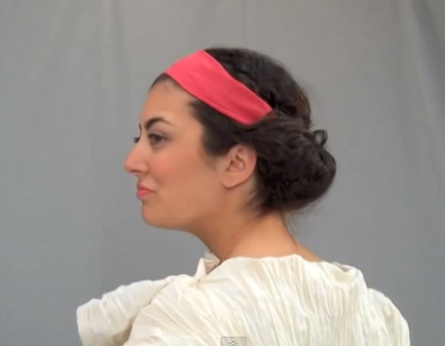
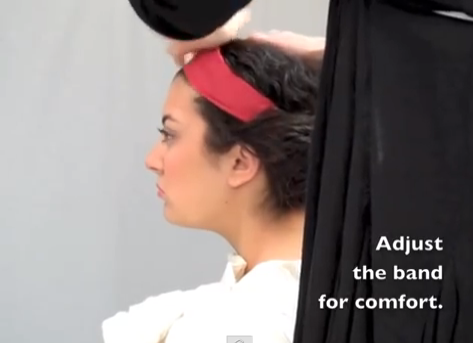
We spent centuries unable to figure out how the hair styles of ancient civilisations were constructed, typically going with “all the women wore wigs” (seriously. That was literally the solution) until a hairdresser with an interest in the hairstyles she saw in classical art turned her hand to them and BLEW THE RESEARCH COMMUNITY AWAY with her incredibly accurate recreations of hairstyles using tools available to the original peoples.

Academia has this real, huge problem where you’ve got a whole bunch of insulated people who know a lot about history and research and academia but shit-all about anything else. And who, when presented with something they can’t figure out, they turn to other academics rather than to people who might have some practical experience with similar stuff.

And it spreads into popular culture in a really unhealthy way. Because there is so much stuff that academia leaves as “ritual purposes” or “we don’t yet know how X was done”, which becomes “it’s a mystery!!!1!” in popular science shows and magazines. Which winds up fuelling the fires of people who would rather believe that ALIENS BUILD THE FUCKING PYRAMIDS than that the Egyptian people might actually have been competent at this thing they did.

Yep. Interesting thing about the hairstylist: there was a word that kept being used in documents about hairstyles that could translate as two different things, one of which was something like “sewing needle”. Academics ruled out that translation of the word, because “lol, sewing hairstyles. That’s ridiculous.” The hairstylist who recreated them… looked at that word, at the available tools of the time, and tried a sewing technique with needles to keep hair in place. AND IT WORKED.

The silo effect in academia is a major problem.

Side note: IDK if this is the same lady or not (it probably is) but there’s an entire youtube channel devoted to not only period-correct hairstyles from ancient greece/rome and egypt all the way up to the napoleonic and civil war eras but also a few needle/fiber/cloth crafts like beading, dyeing, etc. 

Channel is here, the lady’s name is Janet Stephens.

Yep, they are talking about Janet Stephens.

I love her.

The ones that bug me are always the textiles stuff – naturally, as I do that myself. Like the vase paintings of ancient Greeks and Romans and their warp-weighted looms. Archeologists kept saying shit like, “No, that must be an artistic rendering, that couldn’t possibly work like that,” and meanwhile people in Scandinavia are still using nearly identical looms today. Because nobody ever thought to ask actual weavers. The nitwits looking at women preparing wool and spinning on vases, and coming up with completely ridiculous explanations for this shit, and any spinner could glance at it and go, “Um, no.” Just. Argh.

this why you shouldn’t let archeologists theorize.

I bolded the portion above about the problem of insular academics, because I have been frustrated about this for quite some time.

Articles about the Egyptian engineers pouring water on sand to better support sledges with building materials seem to always use language like “clever trick” and “surprisingly simple” when they describe the science behind it:

Experiments revealed
that the required pulling force decreased proportional to the stiffness
of the sand. Capillary bridges arise when water is added to the sand.
These are small water droplets that bind the sand grains together. In the presence of the correct quantity of water, wet desert sand is about twice as stiff as dry sand.
A sledge glides far more easily over firm desert sand simply because
the sand does not pile up in front of the sledge as it does in the case
of dry sand.

If it was so simple and obvious, why were artworks and text showing and explaining how to do this ignored for millennia? Because Egyptologists didn’t look outside their discipline for answers:

image

The answer had been staring us in the face for a long time. In a wall painting from the tomb of Djehutihotep
(schematic above), you can see a worker pouring water on the sand in
front of a sled that’s carrying a colossal statue. The sleds were little
more than large wooden planks with upturned edges. “Egyptologists had
been interpreting the water as part of a purification ritual,“ Bonn says, “and had never sought a scientific explanation.” 

People of Color in European history are marginalized as exceptions and rarities within almost every discipline, but MPoC is about taking those margins and putting them all together in the center of our focus and scrutiny to see what they really have to tell us about the past. I’ve posted about Janet Stephens before, and I’ve watched the videos she’s posted. And a lot of these ancient hairstyles are amazingly practical:

image
image

I think we could all benefit from applying a little pragmatism to our perspectives on history, and keeping in mind that we aren’t set on a course of linear improvement from “worse” to “better”. The past has a lot to teach us, and “ancient” isn’t synonymous with “primitive”. Similarly, we can’t assume that the people in the past didn’t travel, were less tolerant of difference, or more insular in their worldviews. This construction of the past as ubiquitously “worse” is also harmful to our present and our future. After all, if human society must of necessity be better than it has ever been right now, how can we effectively question where we’re going? Analyzing the present in historical context can help us improve not only our lives right now, but our hopes for the future.

I love every part of this thread. 

Strange Gold Spirals Dating Back To Bronze Age Unearthed In Denmark

weneeddiversebooks:

medievalpoc:

Best of 2014: Medievalpoc Fiction Week Masterpost

All Fiction Week Posts in one Mega Reading List!!

Bookmark this for the archives!

canto-ala-alegria:

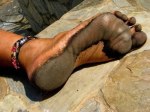
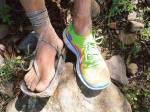
Los tarahumaras (o rarámuris), cuyo nombre en su idioma significa “pies ligeros”, son un grupo indígena que viven en la Sierra Tarahumara de Chihuahua.
Desde que son niños se acostumbran a correr grandes distancias en la Sierra Tarahumara, subidas y bajadas sin parar hasta un día entero, por esto son considerados como los mejores atletas del mundo. Está resistencia es debido a su genética y al pinole (una bebida prehispánica), lo cual les permite correr con huaraches o hasta descalzos.
Cuando se inscriben en carreras toda la comunidad se junta para hacer apuestas, los hombres apuestan dinero (cuando tienen y si no, lo consiguen) y las mujeres faldas.
Son gente que nunca competirán en los Juegos Olímpicos, pues las pruebas no son lo suficientemente largas para ellos.

diversityinya:

This week’s diverse new releases are:

Scarlett Undercover by Jennifer Latham (Little, Brown Books for Young Readers)

“Intrepid sleuth Scarlett has tested out of the last years of high school, founding a detective agency instead of going to college. Ever since the deaths of her Egyptian father and Sudanese mother, Scarlett’s insisted on taking care of herself. Her older sister, a doctor, is too busy to spend much time at home, so Scarlett is proudly independent. When she takes a case from a frightened 9-year-old, Scarlett discovers a terrifying conspiracy that’s endangered her own family for generations. … This whip-smart, determined, black Muslim heroine brings a fresh hard-boiled tone to the field of teen mysteries.” — Kirkus, starred review

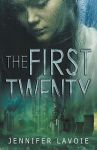
The First Twenty by Jennifer Lavoie (Bold Strokes Books)

Book Description: Humanity was nearly wiped out when a series of global disasters struck, but pockets of survivors have managed to thrive and are starting to rebuild society. Peyton lives with others in what used to be a factory. When her adopted father is murdered by Scavengers, she is determined to bring justice to those who took him away from her. She didn’t count on meeting Nixie.

Nixie is one of the few people born with the ability to dowse for water with her body. In a world where safe water is hard to come by, she’s a valuable tool to her people. When she’s taken by Peyton, they’ll do anything to get her back. As the tension between the groups reaches critical max, Peyton is forced to make a decision: give up the girl she’s learned to love, or risk the lives of those she’s responsible for.

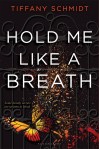
Hold Me Like a Breath by Tiffany Schmidt (Bloomsbury)

“Seventeen-year-old Penny Landlow was born into the ‘family business’; her dad oversees a vast empire of illegal organ donation. … She has limited interaction with the outside world, which is compounded by her disease; Penny suffers from a rare condition called idiopathic thrombocytopenic purpura (ITP). Her body destroys its own platelets for no known reason, and the only treatment is healthy blood infusions every few weeks. … Her brother, mother, and father are brutally murdered, and Penny is forced into a heart-pounding, adrenaline-fueled race to discover the true murderers and survive … A crime narrative that satisfies a craving for suspenseful romance, entertaining adventure, and edge-of-your-seat survival drama.” — School Library Journal

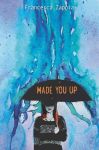
Made You Up by Francesca Zappia (Greenwillow Books)

“Alex is starting her senior year at a new high school, making a clean start after an incident at her previous school. She just wants to keep her grades up and perform her mandatory community service so she can get into college. But Alex knows she’ll have a hard time achieving these goals, since she has paranoid schizophrenia. … This is a wonderfully complicated book. Adolescence can be absurd, breathless, and frantic on its own. Combine it with mental illness, and things get out of control very quickly. Zappia sets a fast pace that she maintains throughout. … Zappia tackles some big issues in her debut, creating a messy, hopeful, even joyful book.” — School Library Journal

mikelaughead:

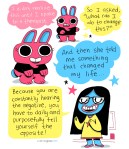
I hope this helps some people the way it helped me.

After giving this same advice about affirmations to a few people in the past few months, I thought I would put this together in comic form.

I actually recorded myself saying my affirmations and I repeat them as I listen on my drive to work. For a while, I got out of the habit of doing it and I realized I was feeling really down on myself. I’ve made it a priority lately and it’s made me feel more upbeat and capable. 🙂

Get a rat and put it in a cage and give it two water bottles. One is just water, and one is water laced with either heroin or cocaine. If you do that, the rat will almost always prefer the drugged water and almost always kill itself very quickly, right, within a couple of weeks. So there you go. It’s our theory of addiction.

Bruce comes along in the ’70s and said, “Well, hang on a minute. We’re putting the rat in an empty cage. It’s got nothing to do. Let’s try this a little bit differently.” So Bruce built Rat Park, and Rat Park is like heaven for rats. Everything your rat about town could want, it’s got in Rat Park. It’s got lovely food. It’s got sex. It’s got loads of other rats to be friends with. It’s got loads of colored balls. Everything your rat could want. And they’ve got both the water bottles. They’ve got the drugged water and the normal water. But here’s the fascinating thing. In Rat Park, they don’t like the drugged water. They hardly use any of it. None of them ever overdose. None of them ever use in a way that looks like compulsion or addiction. There’s a really interesting human example I’ll tell you about in a minute, but what Bruce says is that shows that both the right-wing and left-wing theories of addiction are wrong. So the right-wing theory is it’s a moral failing, you’re a hedonist, you party too hard. The left-wing theory is it takes you over, your brain is hijacked. Bruce says it’s not your morality, it’s not your brain; it’s your cage. Addiction is largely an adaptation to your environment.

[…]

We’ve created a society where significant numbers of our fellow citizens cannot bear to be present in their lives without being drugged, right? We’ve created a hyperconsumerist, hyperindividualist, isolated world that is, for a lot of people, much more like that first cage than it is like the bonded, connected cages that we need. 

The opposite of addiction is not sobriety. The opposite of addiction is connection. And our whole society, the engine of our society, is geared towards making us connect with things. If you are not a good consumer capitalist citizen, if you’re spending your time bonding with the people around you and not buying stuff—in fact, we are trained from a very young age to focus our hopes and our dreams and our ambitions on things we can buy and consume. And drug addiction is really a subset of that.