Just over a week ago, I participated in the United Nations HABITAT and The Guardian’s World Cities Day Challenge. It was an opportunity to share the best urban ideas that are improving city life around the world. According to The Guardian:
We chose 36 finalists, from Tallinn to Calgary to Bhubaneswar, whose favourite city ideas range from baths floating in the river, to a green zone around the city, to a network of connected cultural rooftops. The only rule was that the ideas had to be implemented, or about to be. The contestants have spent the past month putting the finishing touches – a touch of Photoshop, a ton of glitter – on their show-stopping presentations. They each have 12 minutes in the “hot seat” to show off their city with a joke, a clever photograph and, of course, an amazing urban idea.
I represented Vancouver and submitted the idea of my city’s Green Zone – a designated and preserved green space that helped make the Metro Vancouver region into compact cities in a sea of wilderness.
My idea didn’t win, but I enjoyed being part of the event and representing my hometown. When I had a chance to review all of the 36 selected projects, I was so impressed with each one’s ingenuity, simplicity and potential. Any one of these projects could be adopted to improve city life around the world.
Here are my top five favourites (in no particular order):
Tag: travel

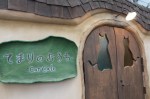
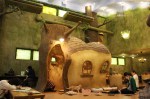


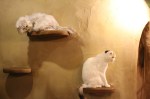
The most beautiful cat cafe I have been to. It’s called Temari no Ouchi (Temari’s house) in Tokyo, Japan. The soft music and ambience feels like you are in a Studio Ghibli film. Had to take the Japan Railway there, but was totally worth the extra trip, & unlike the central Tokyo cat cafes, this one has no time limit, so feels totally relaxed. Several girls were even sleeping there amongst the cats.







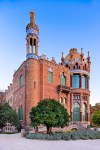


Sant Pau Hospital, Barcelona | Spain (by David Cardelus)
Sant Pau hospital, UNESCO’s World Heritage sites since 1997, has been completely renovated and accessible to the general public. Located several blocks away from Sagrada Familia, the facility, designed by Catalan architect Lluís Domènech i Montaner, has been documented by the camera of David Cardelus.

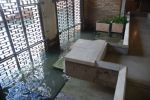
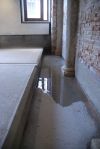

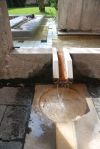
“One morning in 1961 at the Querini Stampalia, I asked him to keep water outside the palace… He looked at me and after a pause he said: “Inside, inside! Water must be inside, like everywhere in the city. We just need to control and use it as a shining and reflecting substance. You will see the light reflections on the yellow and purple stuccos on the ceiling. That is so gorgeous!”
– Giuseppe Mazzariol, director of the Fondazione Querini Stampalia, recalls Carlo Scarpa’s attitude to the creation of the museum space in the centre of Venice.
When I arrived at the Fondazione one afternoon last week, the tide was rising and canal water was slowly infiltrating the dusty channels cast into the museums interior, making it’s way through round holes cut into the walls. The steel grilled ‘watergate’ in the museums facade is permanently submerged and the sound of water lapping against stone inside the corridor and it’s cooling effect makes the space uniquely beautiful, neither interior nor exterior.
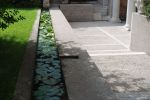
In the garden to the rear there is a beautiful continuity of form and material from the inside spaces.
I think Scarpa’s design and many of the older buildings in Venice offer a positive glimpse of future opportunities for living in cities threatened by rising water levels.






With rolling hills, rows of honey-colored cottages, and stone bridges, the Cotswolds are the epitome of quaint. Photographer Joe Daniel Price captures the loveliness and archetypical English charm that attracts visitors in search of a perfect countryside getaway…or the hopes of meeting a young Jude Law (The Holiday reference).

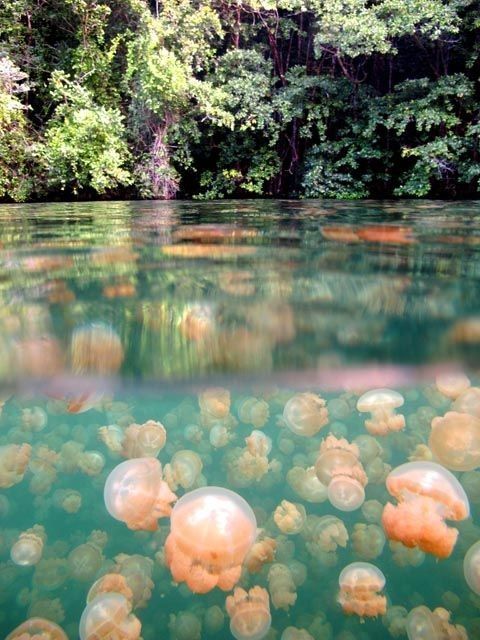
Jellyfish Lake in Palau. Apparently the jellies have lost their ability to sting because of lack of predators in the lake and you can swim with them!
BUCKET LIST.
WAIT BUT THAT’S NOT EVEN THE COOLEST PART: These jellyfish carry small populations of algae inside their bodies and derive much of their nutrition from the sugars that the algae produce. The jellyfish follow the sun across the lake each day and rotate continuously, so that the algae are always getting maximum sunlight exposure for photosynthesis. Then at night they dive to deeper parts of the lake so the algae can absorb nitrogen. It’s one of the best examples of endosymbiosis in action and it’s KICKASS.
FLOATY FRIEND CABBAGES
 nomad-hermit