After years of global searching and processing human response, the internet has finally completed its original task of finding the most perfect cat video possible.
Now that Tumblr’s video player finally works, I wanted to upload this here. (This HD player’s surprisingly good quality) This was my short film that I spent forever on. Please don’t remove my credits, thanks~!
I’m willing to bet there will be a follow up article about how scholars have made a startling discovery that the gold was used for crafts and the craft people of the world will just be like “…..Really?”
I love how they just kind of leap to “A PRIEST KING MUST HAVE WORN THIS SHINY GOLD STUFF!”
“Everything is mysterious! We have no idea! It, uh… it was for a ritual, yes.” “…don’t you say everything is for a ritual?” “Shhh, ancient peoples liked rituals.” “But there’s a giant painting on this wall showing how this was used, and modern crafters you could ask.” “SHHH. RITUALS.”
I have a very strong urge to email that researcher.
This keeps happening, you know.
For decades we thought water or oil was poured onto the rocks being used to build Egyptian pyramids for “ritual purposes”. Turns out if you ask people who have worked on sand they can tell you that wet sand is A LOT EASIER TO DRAG ROCKS ACROSS.
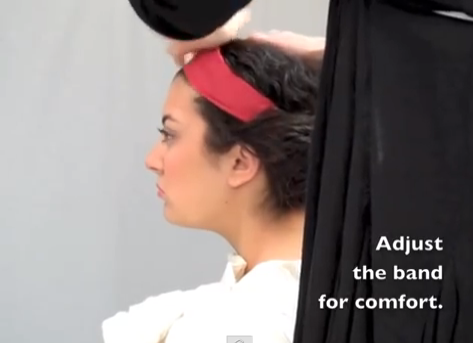
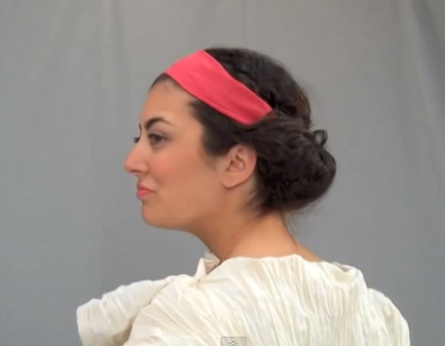
We spent centuries unable to figure out how the hair styles of ancient civilisations were constructed, typically going with “all the women wore wigs” (seriously. That was literally the solution) until a hairdresser with an interest in the hairstyles she saw in classical art turned her hand to them and BLEW THE RESEARCH COMMUNITY AWAY with her incredibly accurate recreations of hairstyles using tools available to the original peoples.
Academia has this real, huge problem where you’ve got a whole bunch of insulated people who know a lot about history and research and academia but shit-all about anything else. And who, when presented with something they can’t figure out, they turn to other academics rather than to people who might have some practical experience with similar stuff.
And it spreads into popular culture in a really unhealthy way. Because there is so much stuff that academia leaves as “ritual purposes” or “we don’t yet know how X was done”, which becomes “it’s a mystery!!!1!” in popular science shows and magazines. Which winds up fuelling the fires of people who would rather believe that ALIENS BUILD THE FUCKING PYRAMIDS than that the Egyptian people might actually have been competent at this thing they did.
Yep. Interesting thing about the hairstylist: there was a word that kept being used in documents about hairstyles that could translate as two different things, one of which was something like “sewing needle”. Academics ruled out that translation of the word, because “lol, sewing hairstyles. That’s ridiculous.” The hairstylist who recreated them… looked at that word, at the available tools of the time, and tried a sewing technique with needles to keep hair in place. AND IT WORKED.
The silo effect in academia is a major problem.
Side note: IDK if this is the same lady or not (it probably is) but there’s an entire youtube channel devoted to not only period-correct hairstyles from ancient greece/rome and egypt all the way up to the napoleonic and civil war eras but also a few needle/fiber/cloth crafts like beading, dyeing, etc.
The ones that bug me are always the textiles stuff – naturally, as I do that myself. Like the vase paintings of ancient Greeks and Romans and their warp-weighted looms. Archeologists kept saying shit like, “No, that must be an artistic rendering, that couldn’t possibly work like that,” and meanwhile people in Scandinavia are still using nearly identical looms today. Because nobody ever thought to ask actual weavers. The nitwits looking at women preparing wool and spinning on vases, and coming up with completely ridiculous explanations for this shit, and any spinner could glance at it and go, “Um, no.” Just. Argh.
this why you shouldn’t let archeologists theorize.
I bolded the portion above about the problem of insular academics, because I have been frustrated about this for quite some time.
Experiments revealed
that the required pulling force decreased proportional to the stiffness
of the sand. Capillary bridges arise when water is added to the sand.
These are small water droplets that bind the sand grains together. In the presence of the correct quantity of water, wet desert sand is about twice as stiff as dry sand.
A sledge glides far more easily over firm desert sand simply because
the sand does not pile up in front of the sledge as it does in the case
of dry sand.
The answer had been staring us in the face for a long time. In a wall painting from the tomb of Djehutihotep
(schematic above), you can see a worker pouring water on the sand in
front of a sled that’s carrying a colossal statue. The sleds were little
more than large wooden planks with upturned edges. “Egyptologists had
been interpreting the water as part of a purification ritual,“ Bonn says, “and had never sought a scientific explanation.”
People of Color in European history are marginalized as exceptions and rarities within almost every discipline, but MPoC is about taking those margins and putting them all together in the center of our focus and scrutiny to see what they really have to tell us about the past. I’ve posted about Janet Stephens before, and I’ve watched the videos she’s posted. And a lot of these ancient hairstyles are amazingly practical:
I think we could all benefit from applying a little pragmatism to our perspectives on history, and keeping in mind that we aren’t set on a course of linear improvement from “worse” to “better”. The past has a lot to teach us, and “ancient” isn’t synonymous with “primitive”. Similarly, we can’t assume that the people in the past didn’t travel, were less tolerant of difference, or more insular in their worldviews. This construction of the past as ubiquitously “worse” is also harmful to our present and our future. After all, if human society must of necessity be better than it has ever been right now, how can we effectively question where we’re going? Analyzing the present in historical context can help us improve not only our lives right now, but our hopes for the future.
This is a proof-of-concept teaser trailer/pitch for an animated feature film called Kariba. It was made by Blue Forest Collective, a South African animation group.
Kariba was conceived as a modern African fairy tale, combining the historical events surrounding the building of the Zambezi river dam wall and the local legend of the river spirit that caused its destruction. “We are using the rich history and mythology around this event,” Snaddon said. “Our aim is to make something that stands out as being uniquely African, a film that respects both its source material, and its audience, while being hugely fun and entertaining.”


















 nomad-hermit