
Removing the shine to your wig —-> ENTER HERE http://fav.me/d5um4ou on We Heart It – http://weheartit.com/entry/54606779/via/LienYing88
Removing the shine to your wig —-> ENTER HERE http://fav.me/d5um4ou on We Heart It – http://weheartit.com/entry/54606779/via/LienYing88
i want quvenzhané wallis to host the golden globes and mispronounce the names of every single white man nominated



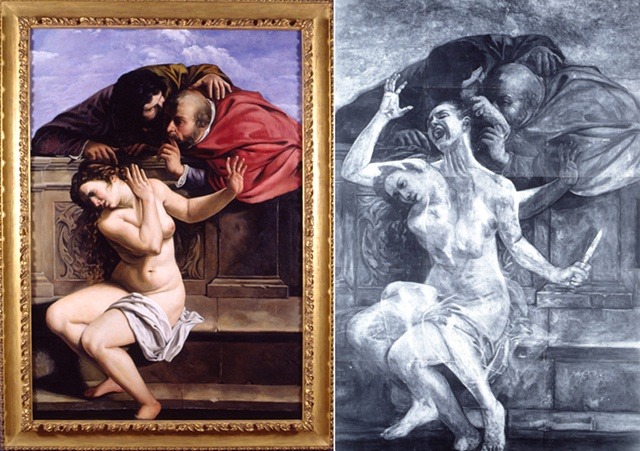
Susanna and the Elders, Restored (Left)
Susanna and the Elders, Restored with X-ray (Right)
Kathleen Gilje, 1998
wow
Oooh my gosh this is rad. This is so rad.
For those who don’t know about this painting, the artist was the Baroque artist Artemisia Gentileschi.
Gentileschi was a female painter in a time when it was very largely unheard of for a woman to be an artist. She managed to get the opportunity for training and eventual employment because her father, Orazio, was already a well established master painter who was very adamant that she get artistic training. He apparently saw a high degree of skill in some artwork she did as a hobby in childhood. He was very supportive of her and encouraged her to resist the “traditional attitude and psychological submission to brainwashing and the jealousy of her obvious talents.”
Gentileschi became extremely well known in her time for painting female figures from the Bible and their suffering. For example, the one seen above depicts the story from the Book of Daniel. Susanna is bathing in her garden when two elders began to spy on her in the nude. As she finishes they stop her and tell her that they will tell everyone that they saw her have an affair with a young man (she’s married so this is an offense punishable by death) unless she has sex with them. She refuses, they tell their tale, and she is going to be put to death when the protagonist of the book (Daniel) stops them.
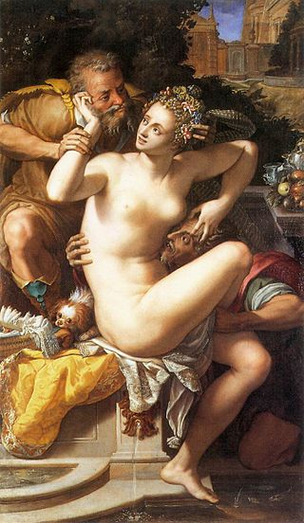
So that painting above? That was her first major painting. She was SEVENTEEN-YEARS-OLD. For context, here is a painting of the same story by Alessandro Allori made just four years earlier in 1606:
Wowwwww. That does not look like a woman being threatened with a choice between death or rape. So imagine 17 year old Artemisia trying to approach painting the scene of a woman being assaulted. And she paints what is seen in the x-ray above. A woman in horrifying, grotesque anguish with what appears to be a knife poised in her clenched hand. Damn that shit is real. Who wants to guess that she was advised by, perhaps her father or others, to tone it down. Women can’t look that grotesque. Sexual assault can’t be depicted as that horrifying. And women definitely can’t be seen as having the potential to fight back. Certainly not in artwork. Women need to be soft. They need to wilt from their captors but still look pretty and be a damsel in distress. So she changed it.
What’s interesting to note is that she eventually painted and stuck with some of her own, less traditional depictions of women. However, that is more interesting with some context.
(Warning for reference to rape, torture, and images of paintings which show violence and blood.)
So, Gentileschi’s story continues in the very next year, 1611, when her father hires Agostino Tassi, an artist, to privately tutor her. It was in this time when Tassi raped her. He then proceeded to promise that he would marry her. He pointed out that if it got out that she had lost her virginity to a man she wasn’t going to marry then it would ruin her. Using this, he emotionally manipulated her into continuing a sexual relationship with him. However, he then proceeded to marry someone else. Horrified at this turn of events she went to her father. Orazio was having none of this shit and took Tassi to court. At that time, rape wasn’t technically an offense to warrant a trial, but the fact that he had taken her virginity (and therefore technically “damaged Orazio’s property”. ugh.) meant that the trial went along. It lasted for 7 months. During this time, to prove the truth of her words, Artemisia was given invasive gynecological examinations and was even questioned while being subjected to torture via thumb screws. It was also discovered during the trial that Tassi was planning to kill his current wife, have an affair with her sister, and steal a number of Orazio’s paintings. Tassi was found guilty and was given a prison sentence of…. ONE. YEAR……. Which he never even served because the verdict was annulled.
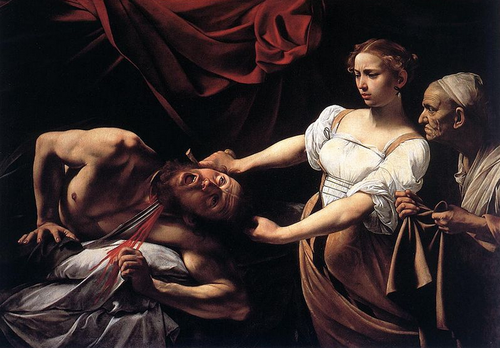
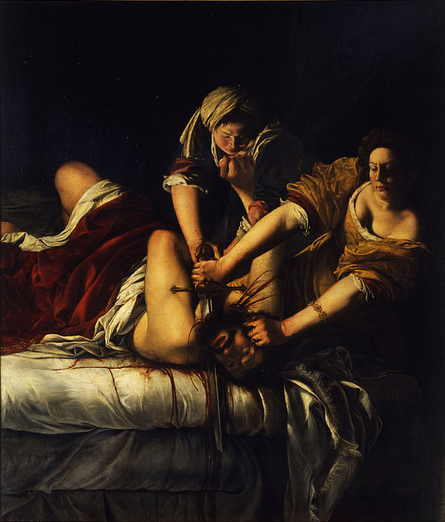
During this time and a bit after (1611-1612), Artemisia painted her most famous work of Judith Slaying Holofernes. This bible story involved Holofernes, an Assyrian general, leading troops to invade and destroy Bethulia, the home of Judith. Judith decides to deal with this issue by coming to him, flirting with him to get his guard down, and then plying him with food and lots of wine. When he passed out, Judith and her handmaiden took his sword and cut his head off. Issue averted. The subject was a very popular one for art at the time. Here is a version of the scene painted in 1598-99 by Carivaggio, whom was a great stylistic influence on Artemisia:
This depiction is a pretty good example of how this scene was typically depicted. Artists usually went out of their way to show Judith committing the act (or having committed it) while trying to detach her from the actual violence of it. In this way, they could avoid her losing the morality of her character and also avoid showing a woman committing such aggression. So here we see a young, rather delicate looking Judith in a pure white dress. She is daintily holding down this massive man and looks rather disgusted and upset at having to do this. Now, here is Artemisia’s:
Damn. Thats a whole different scene. Here Holofernes looks less like he’s simply surprised by the goings ons and more like a man choking on his own blood and struggling fruitlessly against his captors. The blood here is less of a bright red than in Carrivaggio’s but is somehow more sickening. It feels more real, and gushes in a much less stylized way than Carrivaggio’s. Not to mention, Judith here is far from removed from the violence. She is putting her physical weight into this act. Her hands (much stronger looking than most depictions of women’s hands in early artwork) are working hard. Her face, as well, is completely different. She doesn’t look upset, necessarily, but more determined.
It’s also worth note that the handmaiden is now involved in the action. It’s worth note because, during her rape trial, Artemisia stated that she had cried for help during the initial rape. Specifically she had called for Tassi’s female tenant in the building, Tuzia. Tuzia not only ignored her cries for help, but she also denied the whole happening. Tuzia had been a friend of Artemisia’s and in fact was one of her only female friends. Artemisia felt extremely betrayed, but rather than turning her against her own gender, this event instilled in her the deep importance of female relationships and solidarity among women. This can be seen in some of her artwork, and I believe in the one above, as well, with the inclusion of the handmaiden in the act.
So, I just added a million words worth of information dump on a post when no one asked me, but there we go. I could talk for ages about Artemisia as a person and her depictions of women (even beyond what I wrote above. Don’t get me started on her depictions of female nudes in comparison to how male artists painted nude women at the time.)
To sum up: Artemisia Gentileschi is rad as hell. This x-ray is also rad as hell and makes her even radder.
I love art history.
I’m reblogging this again to add something that I also think is important to know about Artemisia Gentileschi.
Back in her time and through even to TODAY, there are people who argue that her artworks were greatly aided by her father…. As in he either helped her paint them or just straight up painted them himself. Hell, there are a number of works only recently (past several years or so) that have been officially attributed to Artemisia because people originally saw the signature with “Gentileschi” in it and automatically attributed it to Orazio.
So, not only was Artemisia Gentileschi an amazing artist and amazing historical figure, but I don’t want it to be ignored that there are people over 400 years later who still won’t give her the credit she deserves, just because she’s a woman and obviously women can’t paint like she did.I fucking love Artemisia Gentileschi

back the fuck up
There’s another story that I like about a Chinese general who had to defend a city with only a handful of soldiers from a huge enemy horde that was in all likelihood going to steamroll the place flat within hours of showing up.
So when said horde did arrive, they saw the general sitting outside the city’s open gates, drinking tea. The horde sent a couple of emissaries over to see what was what, and the general greeted them cheerfully and invited them all to come and take tea with him.
The horde decided that this was a scenario that had “MASSIVE FUCKING TRAP” written all over it in beautiful calligraphy and promptly fucked off.
Whoever that general was, he was clearly the Ancient Chinese equivalent of Sam Vimes.
did he just invite us over for tea nah man i’m out
This just keeps getting better
I fucking love history.
ok but tbh that story misses a lot of the subtlety of the situation like ok
so this story is the Romance of Three Kingdoms, and essentially takes place between Zhuge Liang, resident tactician extraordinaire, and Sima Yi… OTHER resident tactician extraordinaire.
The two were both regarded as tactical geniuses and recognized the other as their rival. Zhuge Liang had a reputation for ambushing the SHIT out of his opponents and using the environment to his advantage, thus destroying large armies with a small number of men. Sima Yi (who kind of entered the picture later) was a cautious person whose speciality was unravelling his opponent’s plans before they began. So it was natural that the two would butt heads; however, since Sima Yi tended to have more men and resources, he started winning battles against the former. Which, y’know, kinda sucked.
On to the actual story: Zhuge Liang is all like “shit i gotta defend this city with like 10 men.” Literally if he fights ANY kind of battle here, he WILL lose; his only option for survival is not to fight. And that’s looking more and more impossible until he hears that his rival is leading the opposing army. And then he gets this brilliant idea. He basically opens all the gates, sends his men out in civilian clothes to sweep the streets, and sits on top of the gate drinking tea and chilling out and basically makes the whole thing out to be a trap
When Sima Yi comes he’s all like “yo come on in bro”
and Sima Yi is like “yeah he’s never been that obvious about his traps before. this is definitely a bluff” and he’s about to head in when he realizes
wait. he knows that i think he’s bluffing.
and so he gets it in his head that maybe, just MAYBE, Zhuge Liang has this cunning plan that will wipe out his army – recall that he has a pretty good handle on what his rival is capable of. And after a long period of deliberation (which is just like “he know that I know that he knows that etc.”), being the cautious man he is, SIma Yi eventually decides to turn his entire army around and leave.
Zhuge Liang later points out that the plan was based specifically on the fact that he was facing his rival; if it had been anyone else, there’s no way it would have worked. A dumber or less cautious person would have simply charged in and won without breaking a sweat.
and that’s the real genius here: it was a plan formed entirely just to deceive one man, and it worked.
Zhuge Liang is the most brilliant, sneaky-ass bastard in history. One time his side’s army was out of arrows, which pretty much meant they were screwed. So Zhuge Liang goes and does the logical thing, which is build a fuck ton of scarecrows and put them all on boats. Then he makes the men hide in the boats and sail them out on the river.
Well, that day was super foggy (which Zhuge Liang had predicted. Did I mention he was also a freakishly accurate meteorologist?). So the enemy across the river sees a fleet of boats armed to the teeth with what appears to be half an army of men. They panic! and start firing arrows like crazy.
Zhuge Liang lets this play out for a while, then he’s like, ”Ok guys that’s enough.” They calmly turn the boats around and go back to base, where they dismantle the scarecrows and pull out all the enemy’s arrows.
Zhuge Liang is legend.
I love this post. It just keeps getting better. Like seriously, I would have adored learning about this in World History.

























 nomad-hermit